
Enriched Experience of 300 Years
An artificial intelligence, humanly impossible, previously unsolvable, hyper-accurate approach to comply with data privacy regulations and prevent synthetic fraud losses.


Trusted By Companies Around the World
From tech startups to healthcare organizations to financial institutions, Data Safeguard is trusted by some of the biggest names in the industry to redact sensitive data. We help global enterprises meet data privacy compliance and prevent significant financial losses caused by synthetic fraud.


Revolutionary AI Solutions

Data Privacy
Our products help enterprises manage the personally identifiable information collected throughout the customer lifecycle. Data Privacy and compliance has been mandated at global, federal, and state levels.

Synthetic Fraud
Our products help corporations identify Frankenstein Identities and mitigate financial losses. Synthetic Fraud is the fastest growing cybercriminal activity that has become the nemesis of the financial industry.

Data Science Lab
Data Safeguard’s Data Science Lab platform is a combination of Data Accelerator and a series of Data Products, including a preconfigured enterprise-scale Data Lake, an Advanced Analytical Lab.
Enterprise-Class Data Safeguard
At Data Safeguard, our best-in-class products offer customers optimal integration, resulting in faster Time-to-Market at the lowest cost.Data Safeguard products have gone through the life-cycle of incubation through maturity. The products have been fail-tested and hardened and made complex customer ecosystem implementation ready by regularly interacting with customers during the evolution of the product suites.
.png)

The Future Of Data Privacy
As data becomes increasingly diverse, businesses must invest in innovative AI and machine learning solutions that can adapt to changing data landscapes.
Take a microscopic view on how varying digital data can impact the future of data privacy based on an independent study.

*68% of users insist on complete safeguarding of their email content.

*62% consider the identity of email correspondents crucial to their privacy and protection.

The safety of content of downloaded files is a top priority for *55% of respondents.

Privacy and security of location data is highly valued by *54% of users.

*51 prioritize securing their data on usage of online chat rooms and groups.

Securing data on websites browsed is a major concern for *46% of users

The Data Safeguard Advantage
Data Safeguard vs. Competitors
When it comes to protecting PII and PHI, you can’t afford a risk. Make an informed decision with our side-by-side comparison of how Data Safeguard outperforms other Data Privacy Solutions.
(DB/Streaming Data/Files)

(DB/Streaming Data/Files)
(Email/Chat/Web Log/Web Form)
(DB/DW/DL/LH/Files)
(Files – PDF/PPT/DOC/CSV/EXL)
(Real time, Historical, Individual files)
(Real time, Historical, Individual files)
.png)
High-Performance Data Privacy and Synthetic Fraud Across Industries
What Our Clients Say


Most Recent News
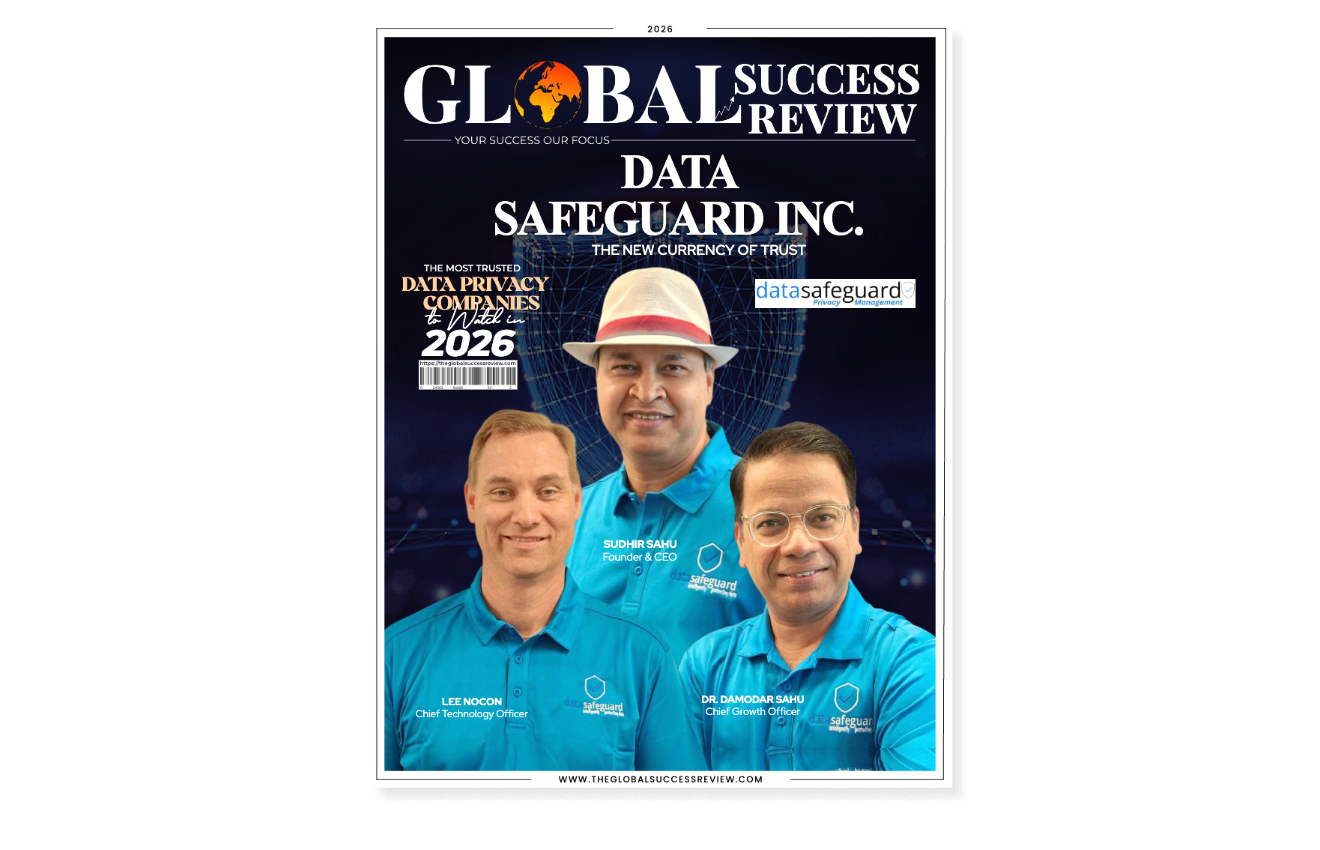
The Most Trusted Data Privacy Companies to Watch in 2026

Data Safeguard secures funding led by FFB Bank to accelerate market presence

ID-REDACT® in Microsoft AppSource

ID-REDACT® from Data Safeguard Inc. Now Available in the Microsoft Azure Marketplace.
.png)
ID-REDACT® product is live

Enterprise Data Privacy – PII & PHI Data Classification
Frequently Asked Questions
Why is data privacy important?
Three reasons that show up on the P&L.
Regulatory exposure. GDPR fines reach €20 million or 4% of global annual turnover, and violations of the data subject rights provisions sit in that top tier rather than the lower one.
Operational cost. Manual handling of access and deletion requests consumes legal and engineering time that scales linearly with request volume — and request volumes have risen every year for five consecutive years.
Commercial trust. Enterprise buyers, particularly in financial services and healthcare, now assess privacy posture during vendor selection. Weak controls cost deals, not just fines.
What is personal data?
Personal data is any information relating to an identified or identifiable person — a name, email address, phone number, account number, IP address, device identifier or location record.
Under GDPR the test is whether a person can be singled out, directly or indirectly, from that information alone or combined with other data the organisation holds. That last clause is the one teams underestimate: fragments that look anonymous in isolation frequently become personal data once they can be joined to another table.
What is personally identifiable information (PII)?
PII is the subset of personal data that identifies a specific individual, either on its own or in combination with other records — full name, Social Security number, driver's licence number, passport number, financial account numbers.
"PII" is the term used most often in US law and security standards; "personal data" is the broader European concept. Most enterprise privacy programmes end up protecting both, because the wider definition sets the compliance obligation while the narrower one concentrates the breach risk.
What is sensitive data?
Sensitive data is information that could cause harm, discrimination or financial loss if exposed.
Most privacy regimes single out a defined set as special-category data: health and medical records, biometric and genetic data, racial or ethnic origin, religious belief, political opinion, trade union membership, sexual orientation, and precise geolocation. California adds a right to limit the use of sensitive personal information as a standalone consumer right.
Processing it generally requires a stronger legal basis than ordinary personal data, and the consequences of mishandling it are correspondingly higher.
What is the difference between redaction, masking and anonymisation?
They solve different problems and are not interchangeable.
Redaction permanently removes or obscures sensitive elements from a record so they cannot be recovered. Use it when data is leaving the organisation — disclosure, publication, DSAR responses, regulatory submissions.
Masking substitutes realistic but fictitious values that preserve the format and behaviour of the original, so applications and tests still function. Use it for non-production environments.
Anonymisation goes furthest, irreversibly removing any means of re-identification. Properly anonymised data generally falls outside the scope of privacy law altogether — but the bar is higher than most teams assume, and weakly anonymised datasets have repeatedly been re-identified.
Data Safeguard provides redaction through ID-REDACT® and masking through ID-MASK®.
What is data discovery and classification?
Data discovery is the process of finding where personal and sensitive data actually lives — across databases, warehouses, data lakes, file shares and collaboration tools, including the copies nobody documented. Classification then labels what was found by type and sensitivity.
Everything else in a privacy programme depends on this step. You cannot honour a deletion request, scope a breach, complete an impact assessment or evidence compliance for data you cannot locate. In most enterprises the gap between the data inventory on paper and the data actually present is the single largest source of privacy risk.
Data Safeguard provides this as Confidential Data Discovery, one of the eight modules of ID-PRIVACY®.
What is the difference between structured, semi-structured and unstructured data?
Structured data sits in defined rows and columns, typically in databases and warehouses. Semi-structured data carries tags or markers but no fixed schema — JSON, XML, log files. Unstructured data has no predefined model at all: documents, spreadsheets, presentations, PDFs, email bodies, chat transcripts.
The distinction matters commercially, not just technically. Most privacy tooling handles structured data well and unstructured data poorly — yet unstructured stores are typically where the majority of an enterprise's personal data actually sits. A discovery programme that only covers databases will report a clean bill of health while leaving the largest exposure untouched.
Data Safeguard's products are built to operate across all three.
Have any questions?
Contact us

.png)

